
Louisiana Court Records After Arrest
Court records after an arrest are not the same as jail roster records. The roster is a custody record. It shows booking status, booked charges, bond, housing, and sometimes a booking photo. The court record starts when the prosecutor files a complaint, bill of information, indictment, or other charging document in the parish court system. That record is where charge status, docket events, dispositions, and sentencing information are tracked.
Louisiana does not have one complete public criminal docket portal that covers every trial court and every case type. The research identifies Clerk Connect, eClerks LA/LCRAA, re:SearchLA, and local parish clerks as the practical access channels. The correct portal depends on the parish, the clerk's participation, the case type, whether online access is available, and whether the record is restricted.
The Clerk Connect portal is a multi-parish access point for participating Louisiana clerks.
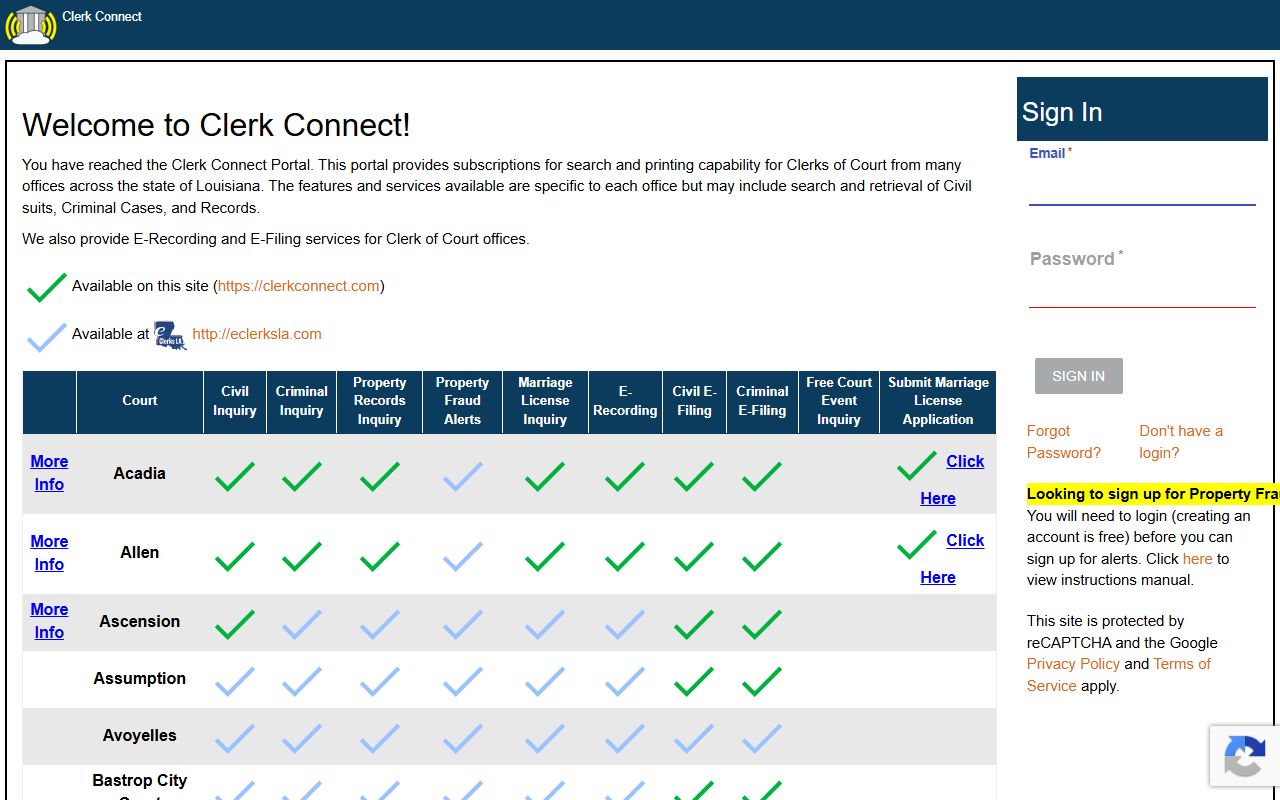
That portal can help with filed case records, but it is not a substitute for a parish jail roster when the question is current custody.
Louisiana Court Record Channels
Louisiana court access is fragmented by design and practice. The parish clerk or court where the charge was filed remains the key custodian for certified copies, older paper records, sealed records, and records not available through a portal. Clerk Connect says it provides subscriptions for search and printing for many Louisiana clerks and may include civil, criminal, property, and land records depending on the office. eClerks LA is the LCRAA statewide portal for available clerk indices across all 64 parishes. re:SearchLA is another Tyler-hosted search interface.
| Channel | Use | Limit |
|---|---|---|
| Parish clerk or court | Official custodian and certified copies | Office rules, fees, and hours vary |
| Clerk Connect | Participating parish clerk records | Coverage depends on clerk and subscription access |
| eClerks LA / LCRAA | Statewide search for available clerk indices | Not every full record or image is public online |
| re:SearchLA | Statewide court-record interface | Availability depends on case and court data |
The eClerks LA statewide portal is the researched LCRAA entry point.
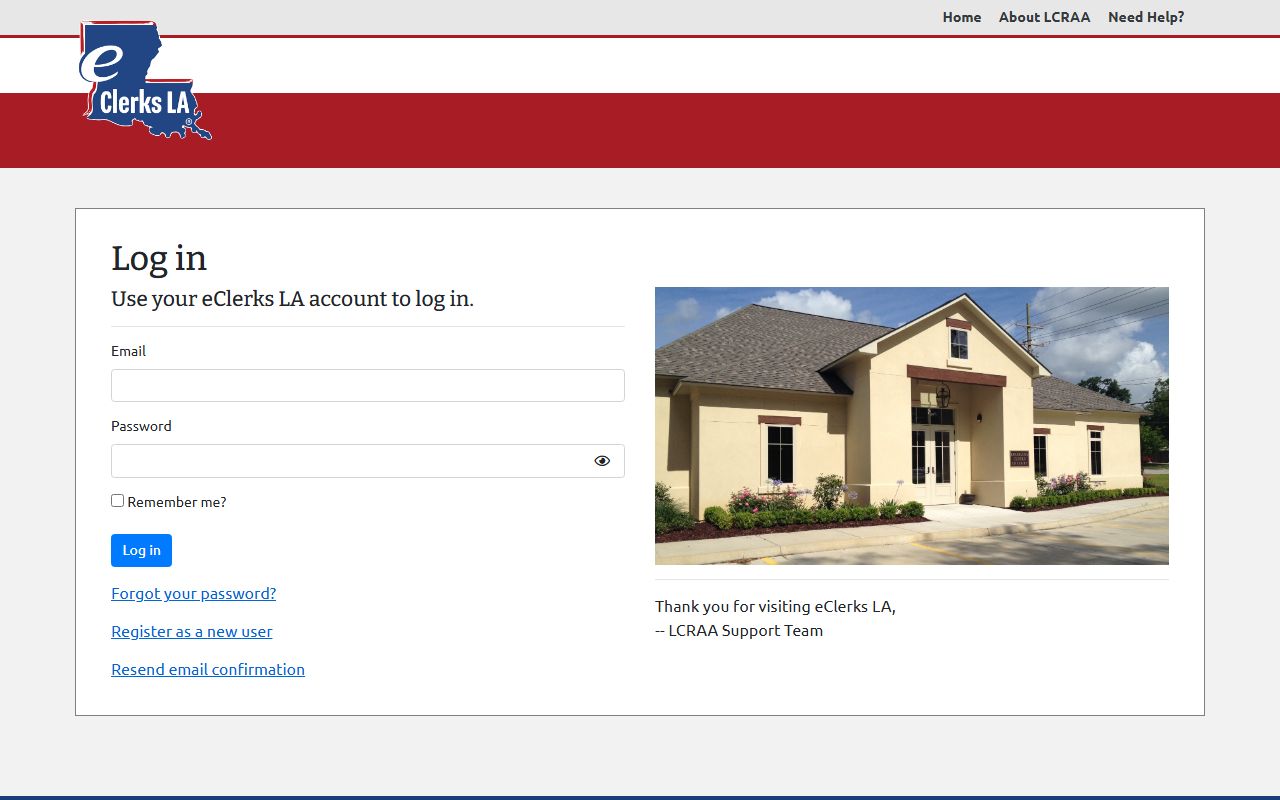
Use statewide portals to locate available indices, then use the parish clerk when the record is restricted, certified, old, or incomplete online.
Search Court Records After Arrest
The court-record path starts with the arrest parish or filing parish. If the person was booked in one parish but later charged elsewhere, use the court where the prosecutor filed the case. When a roster shows only a booked charge, wait for or search the prosecutor-filed case before treating the charge list as the court record.
- Identify the parish where the arrest or prosecution occurred.
- Check the parish clerk or a statewide portal that includes that parish.
- Search by defendant name, case number, or filing date if known.
- Open the case and review charge description, statute, filed date, court events, bond orders, and disposition fields.
- For certified copies or restricted records, contact the parish clerk or court directly.
For custody status tied to the same arrest, use Louisiana inmate records rather than a court-only search.
Charges Filed After Arrest
After a jail arrest, the court record is shaped by the filed charging document. The exact Louisiana criminal pleading can depend on offense level and procedure, but the useful public-facing distinction is between the booking allegation and the charge that appears in court. The filed charge can be amended, reduced, dismissed, or replaced as the case moves.
| Document | Common Role | What to Check |
|---|---|---|
| Complaint | Begins some criminal proceedings or supports probable cause | Initial allegation, officer or prosecutor basis, filing date |
| Bill of information | Prosecutor-filed charge used in many felony and misdemeanor cases | Filed count, statute, grade, amendments |
| Indictment | Grand-jury charging document for serious cases | Count list, defendant name, filed date, later amendments |
Charge Status After Arrest
Charge status can change quickly after a Louisiana jail arrest. A roster may show a booking charge, while the court record later shows a filed charge, amended count, dismissal, plea, verdict, or sentence. The court docket is the better source for the procedural status of a charge.
| Status | Meaning |
|---|---|
| Pending | The charge remains open with no final disposition shown. |
| Amended or reduced | The filed charge changed from the original count or level. |
| Dismissed | The court record shows the charge did not proceed to conviction. |
| Nolle prosequi | The prosecutor declined to proceed on that charge at that time. |
| Convicted or guilty plea | The case reached a conviction through plea or adjudication. |
Bond Records After Arrest
Bond and release records sit between jail and court data. A jail roster may show current bond status, while the court record may show bond orders, modifications, warrants, no-bond holds, or release conditions. Parish practices vary, so do not treat a stale roster bond field as the final court order.
| Bond Term | Plain Meaning |
|---|---|
| Cash bond | Money is posted directly under court or jail rules. |
| Surety bond | A bondsman or surety posts the bond under local rules. |
| Recognizance release | The court releases the person under conditions without a full cash bond. |
| No-bond hold | Release is blocked by a court order, warrant, detainer, or other legal hold. |
Charges vs Convictions
An arrest charge is not a conviction. A charge is an accusation that can be amended, dismissed, or resolved later. A conviction requires a plea or adjudication and should be confirmed in the court record. This distinction matters for fair reading of Louisiana court records after a jail arrest.
| Charge | Conviction | |
|---|---|---|
| Stage | Accusation or filed count | Final plea, verdict, or adjudication |
| Where seen | Roster and court filing | Court disposition and sentence record |
| Meaning | Not proof of guilt | Legal finding or accepted plea |
Sealed Expunged Arrest Records
Louisiana court and arrest records may be restricted by sealing, expungement, juvenile limits, victim privacy rules, or other legal exemptions. The research does not provide a full expungement-eligibility chart, so the statewide page should stay general. A dismissed charge, eligible disposition, or expungement order may change public access, but the exact result depends on the court order and law.
| Sealed | Expunged | |
|---|---|---|
| Public view | Public access is restricted by order or law. | Public access is restricted or treated under expungement rules. |
| Official access | Some agencies may retain limited access. | Access depends on the order and statute. |
| Where to verify | Parish court or clerk | Parish court or clerk |
Important: Do not use a jail roster entry as proof of guilt or final case outcome.
Court Records vs Custody
A Louisiana court record can remain open after a person leaves jail, and a jail record can update before a court filing appears. That timing difference is normal. The jail roster answers where the person is held and what booking data the facility has published. The court docket answers what charge the prosecutor filed, what hearings occurred, whether a warrant or bond order was issued, and how the case ended.
For state-prison sentence questions after conviction, LA DPS&C controls custody and release-date computation. A docket can show the sentence imposed by the court, but it may not show earned credits, revocation effects, local state housing, or later supervision status. Use both systems when the question crosses from court outcome to current custody.
The Louisiana VINELink person search is the state-linked custody search that sits beside, but does not replace, the court docket.
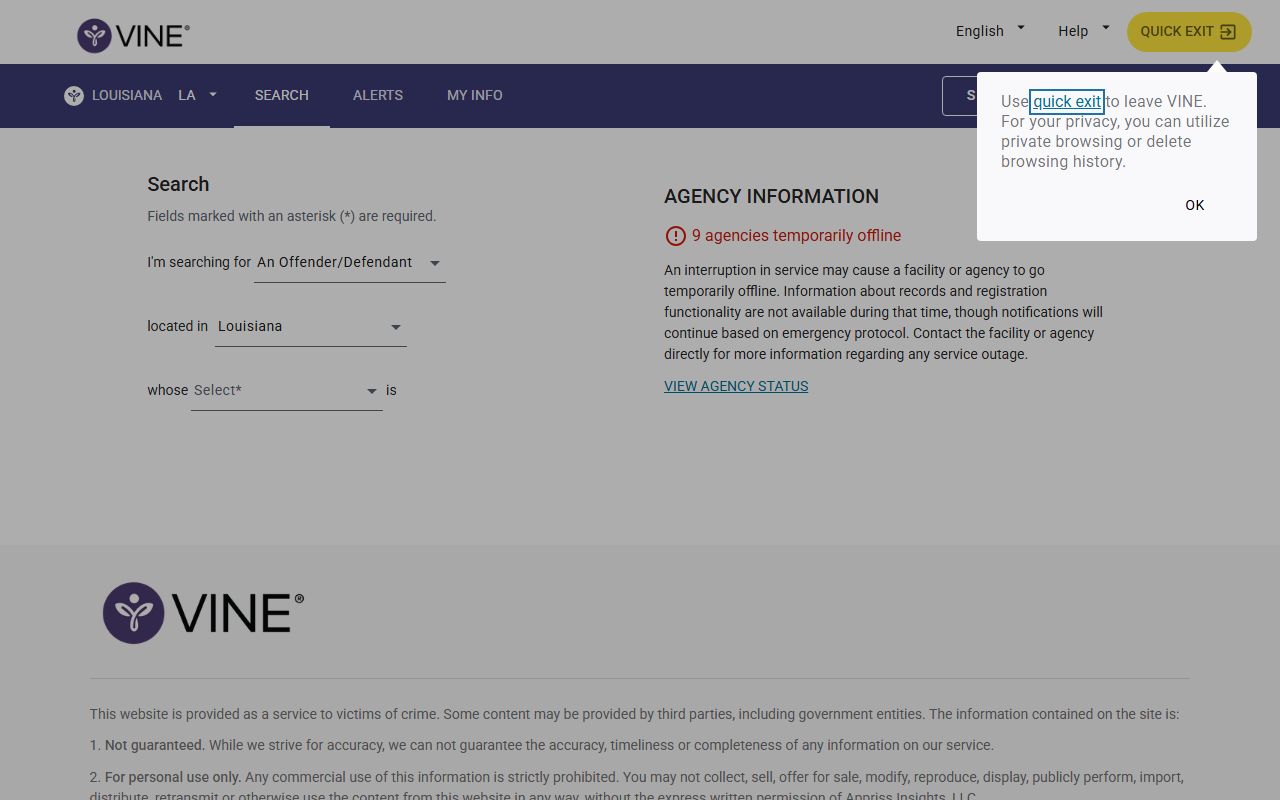
That distinction keeps a custody lookup from being mistaken for the official filed charge record or final disposition.
Louisiana Public Record Limits
Louisiana Public Records Law gives broad access, but exemptions matter. La. R.S. 44:1 defines public records, La. R.S. 44:31 gives the right to inspect and copy public records, and La. R.S. 44:32 covers custodian duties and fees. Juvenile records, sealed cases, expunged records, ongoing investigative material, victim information, and some correctional records can be withheld or limited.
The Louisiana.gov judicial branch overview gives statewide court-system context for public users.
Public-record law helps frame access, but the parish clerk or court controls certified and restricted court-record requests.
Public Record Search
Sponsored Results